
Day Trading vs Swing Trading Crypto: Best Strategy for Signals, Risk & Profit in 2026
Crypto trading offers many opportunities, but one of the biggest questions beginners ask is: should I choose day trading or swing trading? Both trading styles can work, but they are not the same. Day trading is fast, active, and requires quick decisions, while swing trading is slower, more planned, and often easier for part-time traders.
If you are new to cryptocurrency trading, the right choice depends on your time, capital, risk level, trading experience, and emotional control. In this guide, we will compare day trading vs swing trading crypto so you can decide which strategy suits you best in 2026.
Is Day Trading or Swing Trading Better for Crypto?
Swing trading is usually better for beginners because it requires less screen time, fewer trades, and more time to analyze the market. Day trading crypto can offer faster opportunities, but it also comes with higher pressure, more frequent decisions, and greater emotional risk.
If you can watch charts actively and react quickly, day trading may suit you. If you are a beginner, student, working professional, or part-time trader, swing trading may be a better choice.

Swing Trading vs Day Trading Crypto Example
What Is Crypto Swing Trading?
A swing trader had some money, so the trader decided to open a buy position in BTC/USD, expecting a rise. The traders open a trade when the price is trending at $83000, aiming for a 10% profit in 15 days. The trader’s prediction became true, and the trader closed the position on the eighth day at the desired profit.
What Is Crypto Day Trading?
Suppose a day trader was watching the daily chart and expected a price rise based on the analysis. The traders entered a bullish trade in BTC/USD when the price was trending at $93000, aiming for a 1% profit. The trader’s analysis becomes true, and the price rises. The trader closed the trade at $93930 and made a profit of $930.
Day Trading vs Swing Trading Crypto: Main Differences
Factor | Crypto Day Trading | Crypto Swing Trading |
Holding Time | Minutes to hours | Days to weeks |
Best For | Active traders | Beginners and part-time traders |
Risk Level | High | Medium |
Screen Time | High | Low to medium |
Trade Frequency | High | Low |
Decision Speed | Very fast | Planned and slower |
Signal Type | Intraday crypto signals | Swing crypto signals |
Crypto Day Trading vs Swing Trading: Time Frame, Frequency & Screen Time
Factor | Day Trading Crypto | Swing Trading Crypto |
Time Frame | Minutes to a few hours | A few days to a few weeks |
Trade Frequency | High — multiple trades in a day | Low to medium — few trades in a week or month |
Screen Time Needed | High — trader must monitor charts actively | Low to medium — trader can check charts a few times daily |
Decision Speed | Fast decisions required | More time to plan entries and exits |
Best For | Full-time or active traders | Beginners, part-time traders, and patient traders |
Signal Type | Intraday crypto signals | Swing trading crypto signals |
Stress Level | Higher because trades move quickly | Lower because trades have more time to develop |
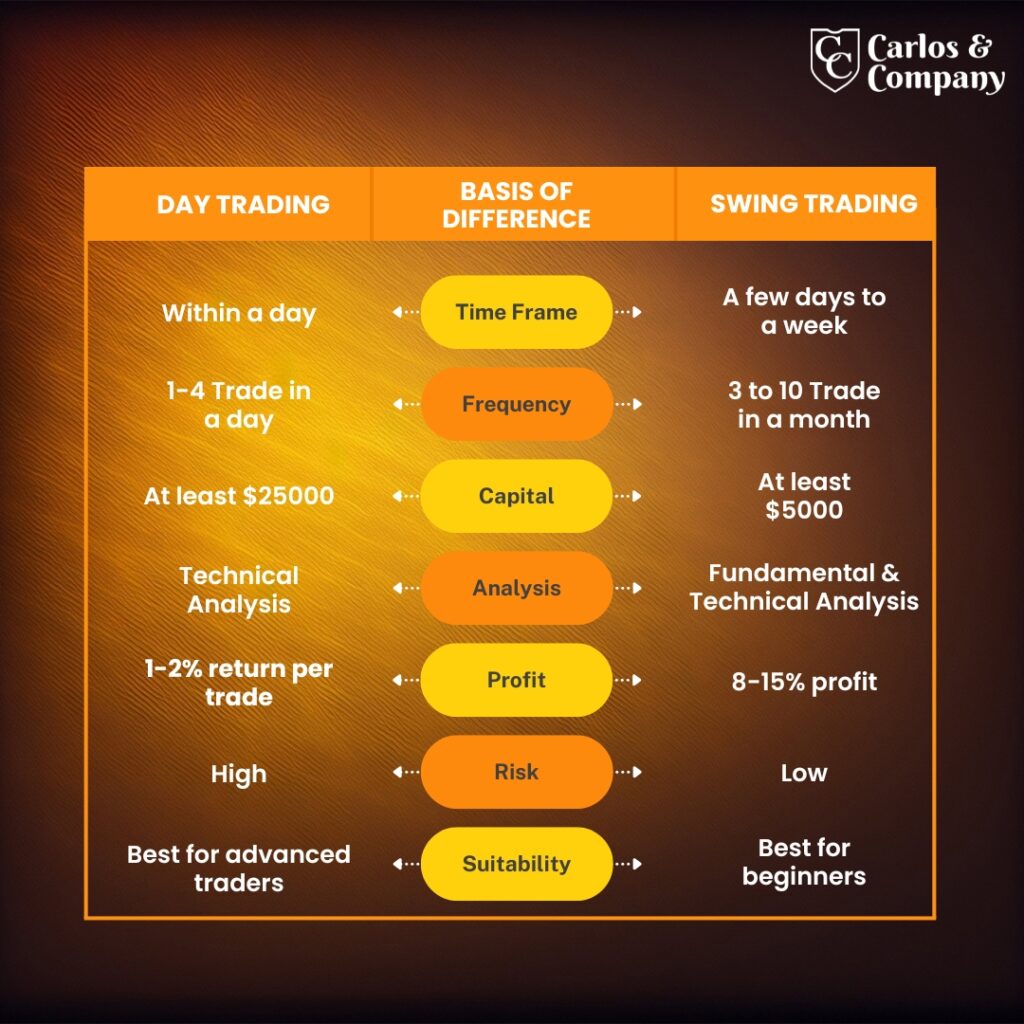
Which Strategy Has More Profit Potential? Day Trading vs Swing Trading
Day trading can create more trading opportunities because crypto prices move throughout the day. However, more trades do not always mean more profit. Day trading also increases the risk of overtrading, emotional decisions, and losses caused by sudden volatility.
Swing trading may create fewer opportunities, but each setup can have a larger target. Swing traders often wait for stronger market confirmation before entering a trade. This can reduce emotional pressure and help traders follow a proper plan.
The truth is simple: profit depends less on the trading style and more on risk management, discipline, strategy, and market timing.
Which Is Better for Beginners?
For most beginners, swing trading is better than day trading. The reason is that beginners usually need more time to understand charts, market structure, support and resistance, and risk management.
Day trading requires quick thinking and strong emotional control. One bad decision can lead to multiple losses in a short time. Swing trading gives beginners more time to study the setup, confirm the trend, and manage the trade.
If you are still learning, start with swing trading or paper trading before moving into fast intraday trades.
Day vs Swing Trading: Risk
Factor | Crypto Day Trading Signals | Crypto Swing Trading Signals |
Best For | Active traders who can monitor charts daily | Beginners, part-time traders, and patient traders |
Holding Time | Minutes to a few hours | A few days to a few weeks |
Trade Frequency | High — multiple signals may come in one day | Low to medium — fewer but more planned signals |
Entry Speed | Fast action is required | More time to enter the trade |
Risk Level | Higher because crypto moves quickly | Medium, but still risky due to market volatility |
Screen Time | High — traders need to watch the market closely | Low to medium — traders can check updates a few times daily |
Best Market Condition | High volatility and strong intraday movement | Clear trend, breakout, or pullback setup |
Main Benefit | Quick trade opportunities | Less stress and more time to manage trades |
Main Challenge | Emotional pressure and overtrading risk | Need patience to hold trades |
Good CTA | Get intraday crypto signals |
Risk Management Rules for Crypto Traders
Whether you choose day trading or swing trading, risk management is the most important part of crypto trading.
Follow these rules:
- Never risk more than 1–2% of your capital on one trade.
- Always use a stop loss.
- Do not enter a trade only because the market is moving fast.
- Avoid over-leverage.
- Do not trade every signal blindly.
- Check Bitcoin’s trend before trading altcoins.
- Take profit according to your plan, not emotions.
Crypto markets can move sharply, so every trade should have a clear entry, stop loss, and target before you enter.
Swing vs Day Trading: Final Words
Day trading and swing trading both have advantages, but they are suitable for different types of traders. Day trading is faster and more active, while swing trading is slower and more beginner-friendly.
If you are new to crypto trading, start with swing trading, learn risk management, and avoid emotional decisions. Once you gain experience, you can explore day trading with proper discipline and a tested strategy.
Want help choosing the right crypto trading style? Carlos & Company provides crypto trading signals, intraday signals, and swing trading signals to help traders understand market opportunities with better planning.
Get a free crypto signal sample or book a free consultation today to see which trading style suits your goals.
Here's a quick look at what you'll read
It solely depends on one’s trading style and time commitment. Usually, Day trading for crypto suits those who are seeking quick gains, while Swing trading for crypto suits those who prefer fewer trades and like to hold positions for days or weeks.
The 1% rule advises traders to risk not more than 1% of their trading capital on a single trade. This will help them manage their risk and protect their account from large losses in market fluctuations.
It depends on one’s availability and goals. Day trading requires quick decisions and constant attention. Swing trading is less time-intensive and suits those who are aiming for medium-term gains with fewer trades.
Day Trading can be profitable in crypto due to high volatility and liquidity, but it also carries lots of risks. It is risky for beginner-level traders, those who cant monitor markets closely an react quickly to the changing prices.
